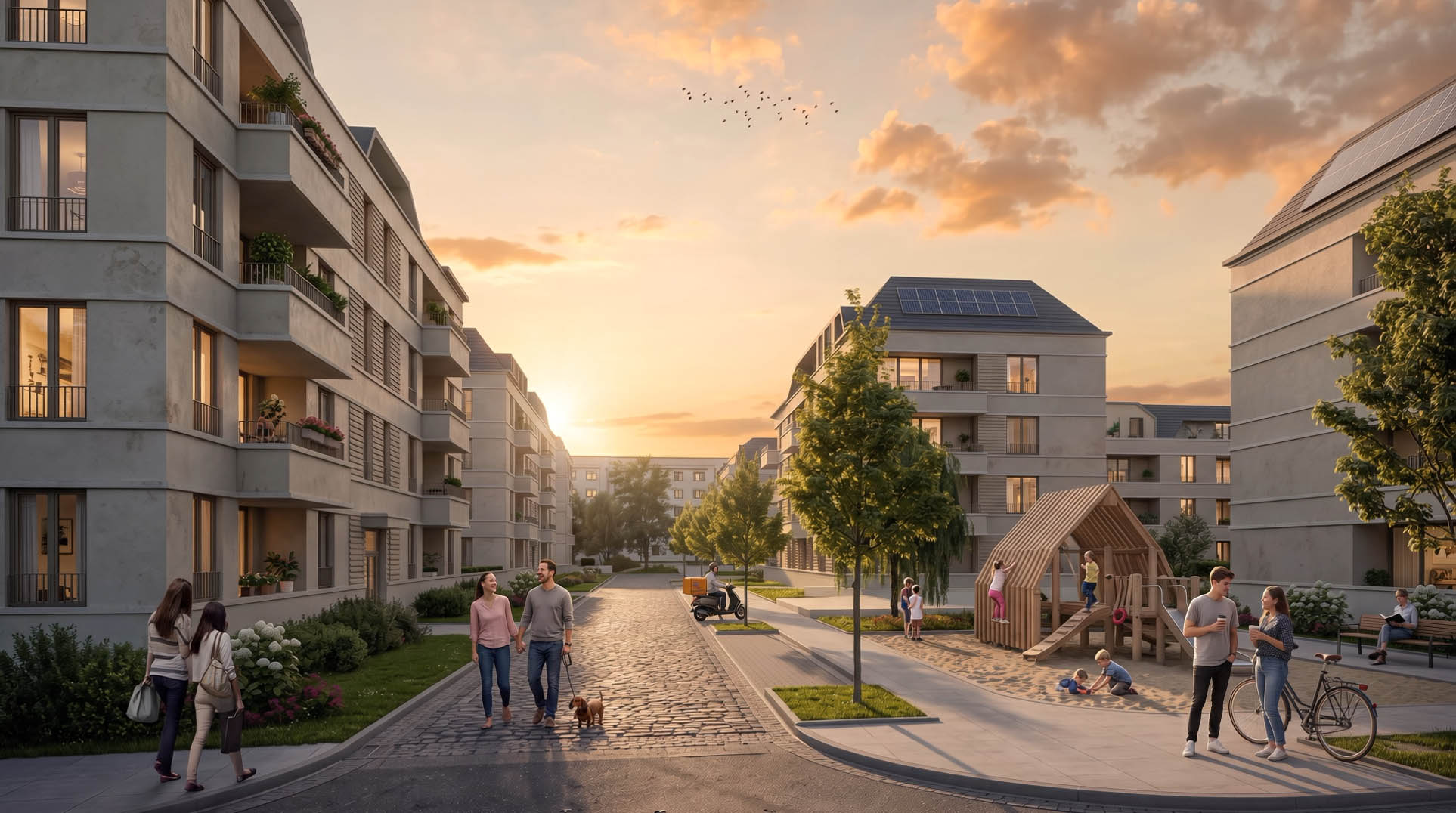
The Dresden rent index, also known as the rent index, is an overview of local comparative rents. It creates transparency in rental prices and serves as an important basis for fair rental agreements. The rent index shows the usual rents in Dresden and offers landlords, tenants and investors a reliable guide for setting appropriate rent levels. It is compiled every two years on the basis of comprehensive data collected by the state capital and analyzed by the ALP Institute.
The Dresden rent index 2025, valid from January 1, 2025, provides valuable insights into the development of rents and helps with rental agreements, adjustments to existing rents and the implementation of the so-called rent freeze. This transparency strengthens confidence and stability on the Dresden housing market – an indispensable tool in an increasingly competitive real estate market.
Rental prices in Dresden vary depending on the location, amenities and size of the apartment. The popular central districts in particular, such as Altstadt and Neustadt, are characterized by higher demand, while the outlying districts offer cheaper options for prospective tenants. Here is an overview of the current rental prices per square meter in the various districts.
As at January 2025
These values provide a guide to rental prices in Dresden. Depending on the property, prices may be higher or lower. We will be happy to provide you with a precise rental price valuation for your property!
Rents in Dresden continue to rise, affecting both tenants and investors. In the third quarter of 2024, the average net cold rent for rental apartments was €10.57/m², compared to €10.25/m² in the same period of the previous year. Prices for houses have also risen and currently stand at €12.17/m². This increase of around 19.67% in the last year shows the dynamism and challenges of Dresden’s rental market. For tenants, this means a noticeable additional burden, while investors benefit from attractive asking prices and a positive property valuation.
Rents in Dresden vary depending on the size of the apartment and the number of rooms. Here is an overview of the average net cold rents per square meter in 2024:
These differences illustrate the high demand for smaller to medium-sized apartments and the tendency towards higher prices per square meter for larger living spaces.
In Dresden, there are significant differences in the rental prices of apartments and single-family homes. The average net rents in 2024 are as follows:
Both categories have seen price increases in the past year, which shows the high demand for housing in the city. The differences illustrate that single-family homes achieve higher prices per square meter due to their size and the additional quality of living.
Rental prices in Dresden are largely determined by the relationship between supply and demand. In sought-after districts where demand exceeds supply, rents often rise faster. The economic environment also plays an important role: districts with well-developed infrastructure, attractive job opportunities and strong public transport links often see more dynamic rental price development. Legal regulations, such as the rent freeze, can also influence market developments and slow down the rise in rents.
The size of the apartment is a decisive factor: while larger apartments are often cheaper per square meter, smaller apartments often have higher rental prices. The year of construction also plays an important role, as modern new builds with better fittings and higher energy efficiency often command higher prices. Factors such as the type of heating and the energy efficiency class increasingly influence rental costs. The floor or the type of apartment (e.g. penthouse or maisonette) can also influence the rental price. Exclusive locations and high-quality fixtures and fittings are generally associated with higher prices per square meter.
The rent freeze is an important instrument for limiting excessive rent increases for new tenancies in regions with a tight housing market. In Dresden, this regulation has been in force since July 13, 2022 and allows landlords to raise the net rent for a new tenancy agreement by a maximum of 10% above the local comparative rent. The comparative rent is determined with the help of the Dresden rent index, which allows for a classification of permissible asking prices based on criteria such as living space, number of rooms, residential areas and year of construction.
However, certain areas are exempt from the rent freeze: New buildings that were first used after 1 October 2014 and extensively modernized houses and rental apartments are not subject to the regulation. These exemptions offer investors and developers the flexibility to market new or modernized properties in the Dresden region without the restrictions of the rent freeze.
The legal requirements of the rent freeze entail rights and obligations for landlords and tenants. Landlords are obliged to take into account the current comparative rent and permissible changes when renting out new properties in order to avoid legal conflicts. Compliance with the regulations helps to ensure that prices offered for rental apartments and houses are in line with the market.
It is important for tenants to know their rights and to seek legal advice if they suspect that their rent is too high. Advice centers of the City of Dresden are available to offer support with questions about property valuation, comparing rental offers and other challenges in the rental market. This creates transparency and security for everyone involved and facilitates the search for fair and appropriate housing options.
Make your dream home in Dresden come true – get started with our expertise and personal advice.
The rent index is an instrument that reflects the local rent level and serves as a comparative rent. It helps landlords and tenants to estimate the rent level of an apartment based on regional averages and serves as a guide during rental negotiations.
The rent index is compiled by analyzing comparable apartments with similar criteria such as living space, number of rooms, year of construction, furnishings and location. This classification enables an accurate property valuation of average rents in different residential areas.
The rent index determines the local comparative rent, which makes the rent freeze effective. This regulation prevents the rent for new lettings from being 10% higher than the specified value.
For tenants, the rent index protects against excessive rents and helps to identify fair offers. Landlords use it to set rents in line with the market and to adjust existing rents in line with the local comparative rent.
Yes, renting or buying an apartment in Dresden is often worthwhile. The region offers attractive yield opportunities thanks to stable rents and long-term increases in value. Condominiums in sought-after residential areas offer buyers financial security, independence from rent increases and long-term benefits such as a possible retirement provision. Dresden impresses with a diverse range of properties and living space for different needs.
Increasing yields are to be expected, particularly in the vicinity of technology parks or universities.
If you would like a free initial consultation, please register here:
You need to load content from reCAPTCHA to submit the form. Please note that doing so will share data with third-party providers.
More InformationYou need to load content from Turnstile to submit the form. Please note that doing so will share data with third-party providers.
More InformationYou are currently viewing a placeholder content from Facebook. To access the actual content, click the button below. Please note that doing so will share data with third-party providers.
More Information